/image%2F1092704%2F20170423%2Fob_25e5a7_p1040287-1-3.jpg)
/http%3A%2F%2Fassets.over-blog.com%2Ft%2Ftwentyeleven%2Fimages%2Fpine-cone.jpg "Maintaining the Good Momentum")
Bonds not Stocks
Published on June 11 2019
09/06/2019
10/06/2019
10/06/2019
10/06/2019
10/06/2019
10/06/2019
09/06/2019
10/06/2019
10/06/2019
10/06/2019
Bank of Finland governor and ECB governing council member Olli Rehn is back out on the wires Tuesday reiterating that the ECB stands ready to act, using all tools available, to counter the ongoing economic weakness and stubbornly low inflation in the Euro-Zone. Rehn, a candidate for the upcoming ECB President’s role, said that the central bank is ‘determined to act and stands ready to adjust all of its instruments, as appropriate’. He also noted that ‘external risks to the Euro-Area won’t fade in the near future’.
These instruments include stronger forward guidance, cutting interest rates further, potential changes to bank reserve rates and re-starting quantitative easing (QE).
The ECB ended the last QE program at the end of 2018 and a swift re-introduction of the program would highlight the lack of effect the four-year, EUR2.6 trillion+ bond buying program has had on the economy. Growth remains tepid, while inflation expectations are near record lows.
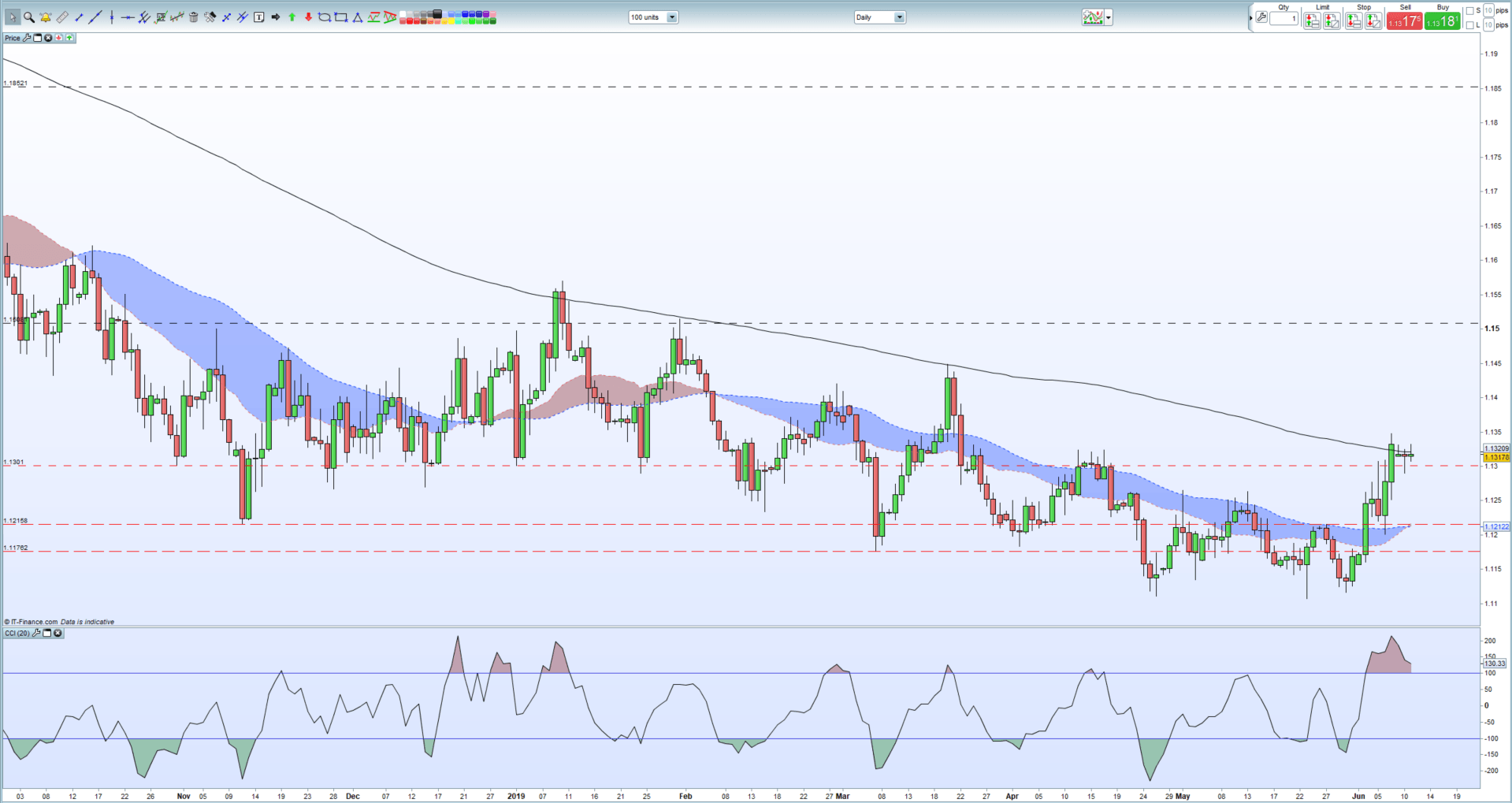
EURUSD price action is currently predicated on US dollar more, more than Euro strength. Post last Thursday’s ECB meeting – where the governing council officially push rates lower for longer – EURUSD touched a peak just under 1.1350 before fading back to its current quote around 1.1318.
The pair traded at a 2019 high of 1.1571 on January 10 before sliding lower over the course of 2019. EURUSD remains in overbought territory, using the CCI indicator, and its upside is currently blocked by the 200-day moving average, a long-term indicator that has held firm all the way back to May 2018.
EURUSD DAILY PRICE CHART (OCTOBER 2018 – JUNE 11, 2019)